As women navigate perimenopause, many seek natural ways to support their well-being. Bacopa monnieri, an herb traditionally used for cognitive support, is often discussed in relation to various health aspects. For those concerned about blood pressure during this life stage, understanding the current scientific landscape regarding bacopa monnieri is important.
This article provides an evidence-based overview of what is currently known about bacopa monnieri and its potential effects on blood pressure. It’s crucial to note that while some preliminary research exists, the evidence is limited, and this information is for educational purposes only, not medical advice.
What is Bacopa Monnieri?
Bacopa monnieri is a perennial herb that has been a staple in traditional wellness practices for centuries. It’s often recognized for its potential influence on cognitive function, leading to its inclusion in various supplements today [1][2]. The active compounds in Bacopa monnieri, known as bacosides, are thought to contribute to its observed effects [3][4].

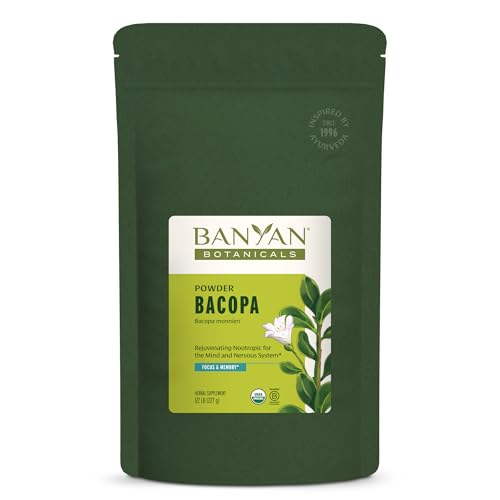
Bacopa Monnieri and Blood Pressure: The Current Research
Research specifically examining the effects of bacopa monnieri on blood pressure in humans, particularly perimenopausal women, is very limited. However, some early studies, primarily in animal models, have explored this connection.
One study found that bacopa monnieri and its constituents appeared to have hypotensive effects in anesthetized rats and demonstrated vasodilator properties in various artery types [5]. Another study further investigated the vasodilatory effects and mechanisms of action of bacopa monnieri active compounds on rat mesenteric arteries [6]. These findings suggest a potential physiological interaction, but it’s important to recognize that results from animal studies do not always translate directly to humans.

It’s also worth noting that while bacopa monnieri is being studied for various health aspects, including cognitive function in conditions like mild cognitive impairment and early Alzheimer’s disease, its direct impact on blood pressure in human populations, especially perimenopausal women, is not yet well-established through clinical trials [7].
Understanding Vasodilation and Hypotension
Vasodilation refers to the widening of blood vessels, which can lead to a decrease in blood pressure. Hypotension is the medical term for low blood pressure. The animal studies mentioned suggest that bacopa monnieri compounds may contribute to vasodilation [6] and have hypotensive effects in specific animal models [5]. However, these are complex physiological processes, and more human-specific research is needed to understand any potential relevance for perimenopausal women.
What This Means for Perimenopausal Women
For women in perimenopause, understanding how various supplements might interact with their body is a key consideration. While preliminary animal research suggests bacopa monnieri may have some influence on blood vessel function and blood pressure [5][6], there is currently no robust clinical evidence to confirm these effects in humans, particularly within the context of perimenopause.


The current body of evidence is insufficient to make definitive statements about bacopa monnieri’s impact on blood pressure in women navigating midlife. Women who are monitoring their blood pressure or managing existing blood pressure concerns should rely on guidance from their healthcare provider.
Safety Considerations and Potential Interactions
As with any supplement, it’s important to consider potential interactions. A review of adverse events noted that adaptogens, a class of herbs that includes bacopa monnieri, may interact with antidepressant drugs [8]. This highlights the importance of discussing all supplements with a healthcare professional, especially if you are taking prescription medications.
Other research on bacopa monnieri has explored its role in areas like cognitive function [2], its potential effects on lipid accumulation [9], and its relevance to conditions like Alzheimer’s and Parkinson’s disease [1][10]. While these areas are distinct from blood pressure, they underscore the herb’s broad biological activity and the need for careful consideration when incorporating it into a health regimen.
References
- Indian Medicinal Herbs and Formulations for Alzheimer’s Disease, from Traditional Knowledge to Scientific Assessment. Brain sciences, 2020
- Botanicals and phytochemicals active on cognitive decline: The clinical evidence. Pharmacological research, 2018
- Lactoferrin-conjugated pH and redox-sensitive polymersomes based on PEG-S-S-PLA-PCL-OH boost delivery of bacosides to the brain. Nanoscale, 2018
- Advances in Bioactive Compounds from Plants and Their Applications in Alzheimer’s Disease. Biomolecules, 2025
- Bacopa monnieri and its constituents is hypotensive in anaesthetized rats and vasodilator in various artery types. Journal of ethnopharmacology, 2011
- Vasodilatory Effects and Mechanisms of Action of Bacopa monnieri Active Compounds on Rat Mesenteric Arteries. Molecules (Basel, Switzerland), 2019
- Efficacy of Bacopa monnieri (Linn.) on Cognitive Function and Alterations in Blood Metabolites in Patients With Amnestic Mild Cognitive Impairment and Early Alzheimer Disease: Protocol for an Exploratory Double-Blind, Randomized, Placebo-Controlled Trial. JMIR research protocols, 2026
- Harder, better, faster, stronger? Retrospective chart review of adverse events of interactions between adaptogens and antidepressant drugs. Frontiers in pharmacology, 2023
- Bacoside-A repressed the differentiation and lipid accumulation of 3T3-L1 preadipocytes by modulating the expression of adipogenic genes. Biotechnology and applied biochemistry, 2024
- Phytochemicals Bridging Autophagy Induction and Alpha-Synuclein Degradation in Parkinsonism. International journal of molecular sciences, 2019
These statements have not been evaluated by the Food and Drug Administration. This information is not intended to diagnose, treat, cure, or prevent any disease. Content is for informational purposes only and is not medical advice; consult a qualified healthcare provider before starting any supplement. As an Amazon Associate we earn from qualifying purchases.
