For women in midlife and during menopause, understanding how to best integrate supplements like Bacopa monnieri into their routine can be an important consideration. When thinking about any supplement, a common question arises: should it be taken with food or on an empty stomach?
This article will explore the current understanding of Bacopa monnieri absorption, particularly focusing on whether taking it on an empty stomach might offer advantages for its uptake in the body. We’ll review available information to help you make informed choices.
What are Bacopa Monnieri and Bacosides?
Bacopa monnieri is an herb that has been traditionally used for centuries. Its potential beneficial properties are mainly attributed to a group of compounds called bacosides, and a 2026 review describes them as the herb’s key active constituents while also noting that they are poorly absorbed [1].
Understanding bacosides is key to discussing absorption, as it’s these specific compounds that the body needs to take in. The way these compounds are presented and consumed can influence their bioavailability, which is the proportion of a substance that enters the circulation when introduced into the body and is thus able to have an active effect.
General Principles of Supplement Absorption
The absorption of any supplement can be influenced by several factors, including its chemical structure, the presence of food in the stomach, stomach acidity, and the individual’s digestive health. Some compounds are fat-soluble, meaning they dissolve in fats and are often better absorbed when consumed with a meal containing some dietary fat. Others are water-soluble and may be absorbed more readily without the presence of food.

The digestive system plays a critical role. When a supplement is ingested, it travels through the stomach and small intestine, where its active components are ideally released and then absorbed into the bloodstream. The environment in the gastrointestinal tract, including pH levels and the activity of digestive enzymes, can significantly affect this process.


Bacopa Monnieri and Absorption: What the Evidence Suggests
Regarding Bacopa monnieri specifically, the scientific literature has begun to explore the pharmacokinetics of its active compounds, the bacosides. While direct, definitive studies specifically comparing bacoside absorption on an empty stomach versus with food in humans are not extensively documented in the published literature, general principles of absorption for certain compounds can offer some insight.
That review names poor solubility in water, a bitter taste, and sensitivity to heat, acid and moisture as the reasons bacosides are not well absorbed, and it points to lipid-based and encapsulated formulations as possible fixes [1]. A 2025 review makes the same point about bacoside A in particular: it does not dissolve in water, so little of it is absorbed when taken by mouth [2]. So the formulation of a product (extract type, carrier, other ingredients) may matter as much for absorption as meal timing does.

Considering Bacopa Monnieri with or Without Food
Given the current understanding, there isn’t a strong, universally established recommendation in the published literature that Bacopa monnieri absolutely must be taken on an empty stomach for optimal absorption. Many supplements, particularly those that may cause mild digestive upset in some individuals, are often recommended to be taken with food to minimize potential discomfort.
While some compounds might see enhanced absorption on an empty stomach due to reduced competition or faster transit, this isn’t a blanket rule for all supplements. For Bacopa monnieri, we found no published study that compares absorption with food against absorption on an empty stomach, in people or in a fed-versus-fasted animal design. The research so far has focused on effects and on new formulations rather than meal timing.
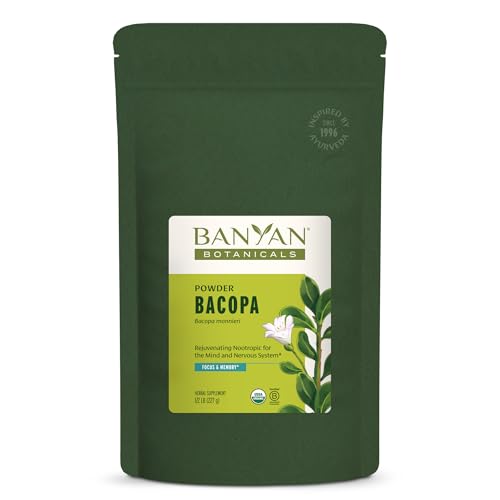
It’s also worth noting that consistency in taking a supplement is often more important than minor variations in absorption timing. Finding a routine that is easy to maintain and comfortable for your digestive system may be a practical approach.
Practical Considerations for Midlife Women
For women navigating midlife and menopause, digestive comfort can be a significant factor when incorporating supplements. Some individuals might experience mild gastrointestinal upset when taking certain supplements without food. If you are prone to stomach sensitivity, taking Bacopa monnieri with a light meal or snack could be a more comfortable option.
Ultimately, the ‘best’ way to take Bacopa monnieri might depend on individual tolerance and preference. If you choose to experiment with taking it on an empty stomach, pay attention to how your body responds. If any digestive discomfort arises, switching to taking it with food could be beneficial. The goal is consistent intake over time to allow its potential properties to manifest.
What the Human Studies Say About Food and Stomach Side Effects
The clearest pattern in the human research is not about absorption but about the stomach. In a 12-week trial that enrolled 98 healthy adults over 55, those taking 300 mg a day of a standardized extract improved on verbal learning and delayed recall compared with placebo, but they also reported more gastrointestinal side effects: more frequent stools, abdominal cramps and nausea [3].
A smaller open-label study shows how participants are often told to take it. The 35 healthy older adults were instructed to take bacopa once each morning, with or without food, with no dietary restrictions. Four of them (11%) stopped early because of nausea or diarrhea, mostly within the first few weeks, and in every case the symptoms resolved after they stopped [4]. The authors suggest these effects may be partly due to bacopa’s action on acetylcholine, and the 2025 review describes the same mechanism: cholinergic stimulation of the gut can increase stomach and intestinal movement, causing cramps and more frequent bowel movements [2]. Neither study tested whether taking it with a meal prevents these symptoms, so eating first is a reasonable comfort choice rather than a proven fix.
On the question of fat, the evidence is laboratory work only. When a standardized bacopa extract was chemically bound to phospholipids (the fatty molecules in cell membranes), it dissolved about 20 times better in water and crossed a tissue barrier far more readily (over 90% versus about 21%). Simply mixing the extract with the same phospholipid, without binding them, made little difference (about 24%) [5]. That suggests taking bacopa with a fatty meal is unlikely to recreate what specialized formulations do, although no one has tested it in people.
References
- From Tradition to Translation: A Critical Appraisal of Bacopa monnieri for Neuroprotection from Preclinical and Clinical Perspectives and Challenges in Utilization. International journal of molecular sciences, 2026
- Bacopa monnieri: Preclinical and Clinical Evidence of Neuroactive Effects, Safety of Use and the Search for Improved Bioavailability. Nutrients, 2025
- Does Bacopa monnieri improve memory performance in older persons? Results of a randomized, placebo-controlled, double-blind trial. Journal of alternative and complementary medicine, 2010
- Bacopa monnieri supplementation has no effect on serum brain-derived neurotrophic factor levels but beneficially modulates nuclear factor kappa B and cyclic AMP response element-binding protein levels in healthy elderly subjects. Journal of clinical and translational research, 2023
- The role of phospholipid as a solubility- and permeability-enhancing excipient for the improved delivery of the bioactive phytoconstituents of Bacopa monnieri. European journal of pharmaceutical sciences, 2017
These statements have not been evaluated by the Food and Drug Administration. This information is not intended to diagnose, treat, cure, or prevent any disease. Content is for informational purposes only and is not medical advice; consult a qualified healthcare provider before starting any supplement. As an Amazon Associate we earn from qualifying purchases.
