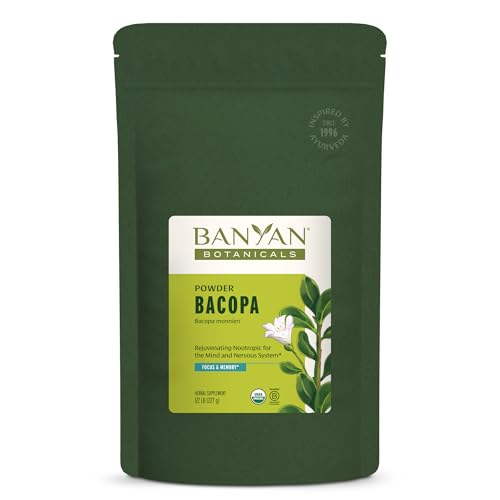
As women move through midlife and menopause, concerns about maintaining cognitive function are common. Many seek ways to support their brain health over time. Bacopa monnieri, an herb traditionally used in Ayurvedic practices, has garnered attention for its potential effects on cognition.
This article explores the current understanding of bacopa monnieri’s role in supporting long-term cognition. We will review findings from various studies to provide an evidence-based perspective on how this herb might contribute to sustaining brain health as you age.
Understanding Bacopa Monnieri and Its Cognitive Focus
Bacopa monnieri, often referred to as Brahmi, is a creeping herb native to wetlands in India and other parts of Asia. Its use in traditional systems of medicine spans centuries, primarily for its perceived benefits related to memory and intellect. Modern scientific inquiry has begun to investigate these traditional uses, focusing on the herb’s potential impact on various aspects of cognitive function.
The active compounds in bacopa monnieri, known as bacosides, are believed to be responsible for many of its observed effects. Research has explored how these compounds might interact with neurological pathways, potentially influencing learning and memory processes. While the full spectrum of mechanisms is still being elucidated, the focus remains on its capacity to support cognitive well-being.

Impact on Learning and Memory Processes
Several studies have investigated bacopa monnieri’s influence on learning and memory. For instance, research in animal models has indicated that bacopa monnieri may improve performance in novel object recognition tasks [1][2][3]. This suggests a potential role in aspects of memory formation and recall.

Further animal model studies have explored how bacopa monnieri might affect specific brain regions associated with cognition. Findings suggest that it could influence neuronal density in areas such as the prefrontal cortex, striatum, and hippocampus [2]. Additionally, bacopa monnieri has been observed to affect the density of certain vesicular glutamate transporters (VGLUT1, VGLUT2, VGLUT3) in the brain, which are involved in neurotransmission [4][5][1]. These observations point to potential mechanisms through which bacopa monnieri may support cognitive processes.
Supporting Brain Health Over Time
The concept of ‘long-term’ cognitive benefits implies sustained support for brain function. While many studies on bacopa monnieri are of shorter duration, the collective findings suggest a potential for ongoing benefits. The observed effects on neuronal density and neurotransmitter systems in animal models suggest a foundational support for brain structures and functions that are crucial for sustained cognitive performance [2][4][5][3].
Maintaining brain health as we age involves a complex interplay of factors, including neuronal communication and structural integrity. Bacopa monnieri’s potential influence on these aspects, as suggested by animal studies, offers a glimpse into how it might contribute to cognitive resilience over time. For example, its impact on NMDAR1 immunodensity in various brain regions has been noted in animal models [3], indicating a potential role in synaptic plasticity, which is vital for learning and memory.

Considerations for Women in Midlife and Menopause
Midlife and menopause often bring about hormonal shifts that can sometimes be accompanied by changes in cognitive experiences, such as ‘brain fog’ or difficulty with memory recall. While bacopa monnieri is not a solution for these changes, understanding its potential cognitive support may be relevant.

The research, primarily in animal models, suggests bacopa monnieri’s involvement in processes that underpin healthy cognitive function. These processes are relevant regardless of life stage. While direct human studies specifically on long-term cognitive benefits for women in menopause are still developing, the existing evidence on learning, memory, and neuronal support provides a basis for considering its potential role in a broader brain health regimen.
Ongoing Research and Future Directions
Research into bacopa monnieri continues to evolve. For instance, studies are exploring various aspects, including protocols for investigating its effects on areas like hyperactivity and inattention in specific populations [6]. Other research focuses on the plant itself, examining factors that enhance bacoside synthesis [7] and how the plant responds to environmental stressors, which can influence secondary metabolite elicitation [8].
Further studies are also characterizing bacosides and their delivery systems [9]. These investigations collectively contribute to a deeper understanding of bacopa monnieri’s potential applications and how its beneficial compounds can be optimized. As scientific understanding progresses, more detailed insights into its long-term cognitive support in human populations, including women in midlife and menopause, may emerge.
References
- Bacopa monnieri (Brahmi) improved novel object recognition task and increased cerebral vesicular glutamate transporter type 3 in sub-chronic phencyclidine rat model of schizophrenia. Clinical and experimental pharmacology & physiology, 2016
- Cognitive enhancement effects of Bacopa monnieri (Brahmi) on novel object recognition and neuronal density in the prefrontal cortex, striatum and hippocampus in sub-chronic phencyclidine administration rat model of schizophrenia. Journal of the Medical Association of Thailand = Chotmaihet thangphaet, 2015
- Neuroprotective effects of Bacopa monnieri (Brahmi) on novel object recognition and NMDAR1 immunodensity in the prefrontal cortex, striatum and hippocampus of sub-chronic phencyclidine rat model of schizophrenia. Journal of the Medical Association of Thailand = Chotmaihet thangphaet, 2014
- Bacopa monnieri (Brahmi) Prevents Cognitive Deficit by Maintaining CA2/3 VGLUT1 Density of Sub-Chronic Phencyclidine Rat Model of Schizophrenia in Normal Level. Journal of the Medical Association of Thailand = Chotmaihet thangphaet, 2016
- Bacopa monnieri (Brahmi) Enhanced Cognitive Function and Prevented Cognitive Impairment by Increasing VGLUT2 Immunodensity in Prefrontal Cortex of Sub-Chronic Phencyclidine Rat Model of Schizophrenia. Journal of the Medical Association of Thailand = Chotmaihet thangphaet, 2015
- A Randomized Controlled Trial Investigating the Effects of a Special Extract of Bacopa monnieri (CDRI 08) on Hyperactivity and Inattention in Male Children and Adolescents: BACHI Study Protocol (ANZCTRN12612000827831). Nutrients, 2015
- Enhanced bacoside synthesis in Bacopa monnieri plants using seed exudates from Tamarindus indica. Plant physiology and biochemistry : PPB, 2024
- Physiological and metabolic responses of Bacopa monnieri to salt-induced stress: implications for secondary metabolite elicitation. BMC plant biology, 2025
- Characterization of withanolides and bacoside A-loaded proniosomes: effect on oxidative stress and survival under hypergravity in rodent model. Drug development and industrial pharmacy, 2023
These statements have not been evaluated by the Food and Drug Administration. This information is not intended to diagnose, treat, cure, or prevent any disease. Content is for informational purposes only and is not medical advice; consult a qualified healthcare provider before starting any supplement. As an Amazon Associate we earn from qualifying purchases.
