Navigating midlife and menopause often brings a focus on supporting cognitive well-being. Bacopa monnieri, an herb traditionally used in Ayurvedic practices, has garnered interest for its potential role in this area. For those considering integrating bacopa into their routine, understanding an appropriate starting dose and schedule is a common first step.
This guide aims to provide evidence-based information on typical bacopa starting dose practices, helping new users make informed decisions. It’s important to remember that individual responses can vary, and this information is not a substitute for professional medical advice.
Understanding Bacopa Monnieri Extracts
Bacopa monnieri is an herb that has been traditionally utilized in Ayurvedic medicine for its purported benefits related to cognitive function and neurological health [1][2]. Research has explored its potential effects on areas such as memory and stress response. The herb contains active compounds called bacosides, which are thought to be responsible for many of its observed properties.
When considering a bacopa starting dose, it’s crucial to differentiate between raw herb powder and standardized extracts. Standardized extracts are typically concentrated to contain a specific percentage of bacosides, often 20% or 50%. This standardization allows for more consistent dosing compared to the variable content of the raw plant material. For example, some research has investigated bacopa’s influence on amyloid levels in animal models [3] and its antiangiogenic-like properties in fermented extracts [4], highlighting the various ways the plant’s compounds are studied.
The concentration of bacosides in an extract directly impacts the amount of product needed to achieve a particular daily dose of active compounds. Therefore, reviewing the product label for bacoside content is an essential step in determining an appropriate bacopa starting dose. This attention to detail helps ensure that new users begin with a considered and measured approach.

Common Bacopa Starting Dose Ranges
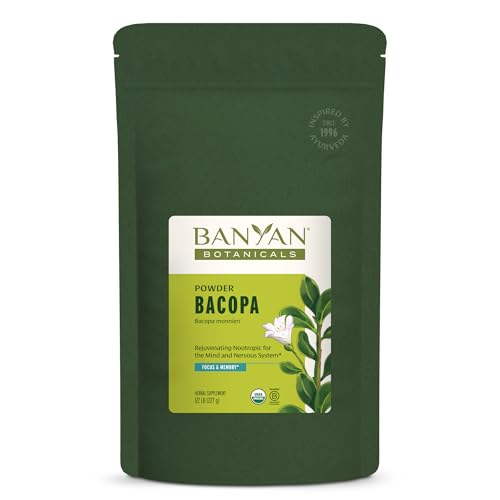
For standardized bacopa monnieri extracts, a commonly explored bacopa starting dose in research settings often falls within the range of 300 mg to 450 mg of extract per day, standardized to 20-50% bacosides[5]. Some studies have investigated the effects of bacopa on cold stress-induced neurodegeneration in animal models, suggesting a basis for exploring its neurological impacts [6]. Some people choose to begin below that range and build up over the first couple of weeks to gauge tolerance. That is a personal titration choice rather than a protocol the trials tested, so it is worth reaching the studied range before judging whether bacopa is working.

When beginning with bacopa, many individuals opt for the lower end of the suggested dose range to assess their individual response. For instance, if using an extract standardized to 50% bacosides, a 150 mg dose would provide 75 mg of bacosides. If using an extract standardized to 20% bacosides, a 300 mg dose would provide 60 mg of bacosides. The goal is to find the lowest effective dose for your individual needs. Research continues to explore various aspects of bacopa, including its potential to inhibit α-glucosidase using debittered formulations [7] and its use in novel biochar development [8], which may influence future understanding of its compounds.
The ‘bacopa starting dose’ is not a fixed universal number, but rather a guideline informed by existing research. It’s always advisable to consult with a healthcare provider before starting any new supplement, especially for women in midlife and menopause who may have other health considerations or be taking other medications.
Considering a Daily Schedule for New Users
Bacopa monnieri is generally taken daily. For a bacopa starting dose, many find it beneficial to take the supplement with a meal, as this can help minimize any potential digestive discomfort. Some sources suggest taking it with breakfast or lunch. Unlike some supplements that provide immediate effects, bacopa is often considered to have cumulative benefits, meaning it may take several weeks to months of consistent use to observe its potential effects.
Consistency is a key aspect of any bacopa regimen. Missing doses regularly could impact the overall experience. A typical schedule might involve taking the chosen bacopa starting dose once daily. Some individuals choose to split their daily dose into two smaller portions, for example, taking half in the morning and half in the evening, though once-daily dosing is also common and often sufficient.

It’s important to establish a routine that is sustainable for you. Pay attention to how your body responds over time. While some studies have explored bacopa as part of multi-nutrient supplements on cognition and mood in middle-aged adults [9], individual responses to bacopa alone can vary. Patience and consistent adherence to your chosen bacopa starting dose and schedule are often recommended.
Titration: Gradually Adjusting Your Bacopa Dose
After starting with a lower bacopa starting dose, some individuals may choose to gradually increase their dose over time, a process known as titration. This allows the body to adjust and helps in identifying the optimal dose for individual needs while minimizing the likelihood of experiencing any temporary side effects. For example, if you start with 150 mg of a standardized extract, you might consider increasing to 200 mg or 250 mg after a few weeks, if desired and well-tolerated.
Any increase should be small and incremental, with sufficient time between increases to observe your body’s response. It is generally not recommended to exceed the higher end of commonly studied doses (around 450 mg daily) without explicit guidance from a healthcare professional. The goal of titration is to find the lowest effective dose for your individual needs, rather than simply taking the maximum amount. Research into compounds like CDRI-08 (a bacopa derivative) and its synergistic effects with other agents against certain cancers [10] underscores the complexity and potential potency of bacopa’s constituents, emphasizing the importance of measured dosing.

Listen to your body and discontinue use or reduce the dose if you experience any adverse reactions. Maintaining open communication with your healthcare provider throughout this process is important, especially for women navigating the unique physiological changes of midlife and menopause.
References
- Ayurvedic Medicine for the Treatment of Dementia: Mechanistic Aspects. Evidence-based complementary and alternative medicine : eCAM, 2018
- Traditional Herbal Medicines Against CNS Disorders from Bangladesh. Natural products and bioprospecting, 2020
- Bacopa monniera extract reduces amyloid levels in PSAPP mice. Journal of Alzheimer’s disease : JAD, 2006
- Antiangiogenic-Like Properties of Fermented Extracts of Ayurvedic Medicinal Plants. Journal of medicinal food, 2015
- Pase MP et al. The cognitive-enhancing effects of Bacopa monnieri: a systematic review of randomized, controlled human clinical trials. Journal of Alternative and Complementary Medicine (2012). PMID 22747190
- Effect of bacopa monniera on cold stress induced neurodegeneration in hippocampus of wistar rats: a histomorphometric study. Journal of clinical and diagnostic research : JCDR, 2015
- Studies on inhibition of α-glucosidase using debittered formulation of Bacopa monnieri juice: Enzyme inhibition kinetics, interaction strategy, and molecular docking approach. International journal of biological macromolecules, 2025
- Development of novel biochar derived from Bacopa monnieri leaves for adsorptive removal of pendimethalin herbicide from binary and ternary pesticide mixture. RSC advances, 2025
- Investigating the Effects of a Multinutrient Supplement on Cognition, Mood and Biochemical Markers in Middle-Aged Adults with ‘Optimal’ and ‘Sub-Optimal’ Diets: A Randomized Double Blind Placebo Controlled Trial. Nutrients, 2022
- Synergistic anticancer effect of CDRI-08 and abiraterone acetate against castration resistant prostate cancer targeting PI3K/Akt pathway. Iranian journal of basic medical sciences, 2025
These statements have not been evaluated by the Food and Drug Administration. This information is not intended to diagnose, treat, cure, or prevent any disease. Content is for informational purposes only and is not medical advice; consult a qualified healthcare provider before starting any supplement. As an Amazon Associate we earn from qualifying purchases.
