Bacopa monnieri, often known as Brahmi, is a creeping herb with a long history of use in traditional Ayurvedic medicine. For centuries, it has been valued for its potential effects on various aspects of well-being, particularly those related to cognitive function and mental clarity.
As women navigate the unique physiological changes of midlife and menopause, there’s a growing interest in natural approaches to support overall health. Understanding the traditional applications of Bacopa monnieri, alongside contemporary research, can offer insights into its potential role during this life stage.
Bacopa Monnieri in Ancient Ayurvedic Practice
In Ayurveda, the traditional Indian system of medicine, Bacopa monnieri has been revered for thousands of years. It is classified as a ‘Medhya Rasayana,’ a category of herbs believed to support intellect and memory. The term ‘Brahmi’ itself is derived from ‘Brahma,’ the Hindu creator god, signifying its esteemed status for promoting knowledge and consciousness.
Traditional texts suggest Bacopa monnieri was used to enhance learning, improve memory, and support mental acuity. It was also traditionally employed to help manage stress and promote a sense of calm. These historical applications highlight a long-standing belief in its neuroactive properties and its role in maintaining cognitive balance [1].
Traditional Uses Beyond Cognitive Support
While its cognitive benefits are perhaps the most recognized, Bacopa monnieri’s traditional uses extended to other areas of health. In Ayurvedic practices, it was sometimes used to support nervous system health and to promote relaxation. This broader application suggests that traditional practitioners viewed Bacopa monnieri as a herb that could contribute to overall mental and emotional well-being [1].
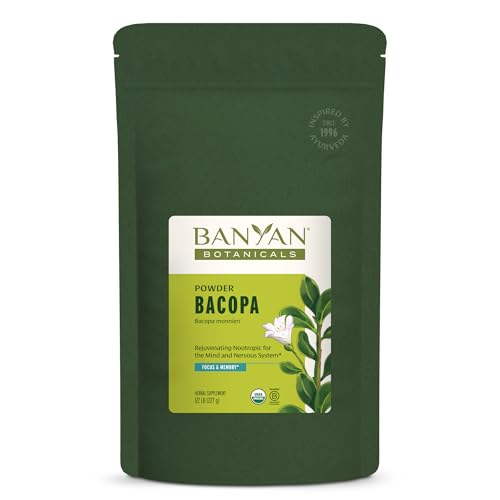
The traditional understanding of Bacopa monnieri often encompassed a holistic view of health, where mental and physical states were seen as interconnected. Its use was not solely focused on isolated symptoms but rather on supporting the body’s intrinsic ability to maintain balance and function optimally.
Modern Scientific Interest in Bacopa Monnieri
Contemporary scientific research has begun to explore the mechanisms behind Bacopa monnieri’s traditional uses. Studies have investigated its potential neuroactive effects, aligning with its historical reputation as a cognitive enhancer [2]. The herb contains active compounds called bacosides, which are thought to be responsible for many of its observed effects [1].
Research has explored Bacopa monnieri’s potential to support various aspects of cognitive function, including memory and attention. A meta-analysis of randomized controlled trials examined the cognitive effects of Bacopa monnieri extract, providing a contemporary perspective on its potential [3]. Further studies continue to investigate its potential in areas such as neuroprotection [4] and cognitive function in specific populations [5].
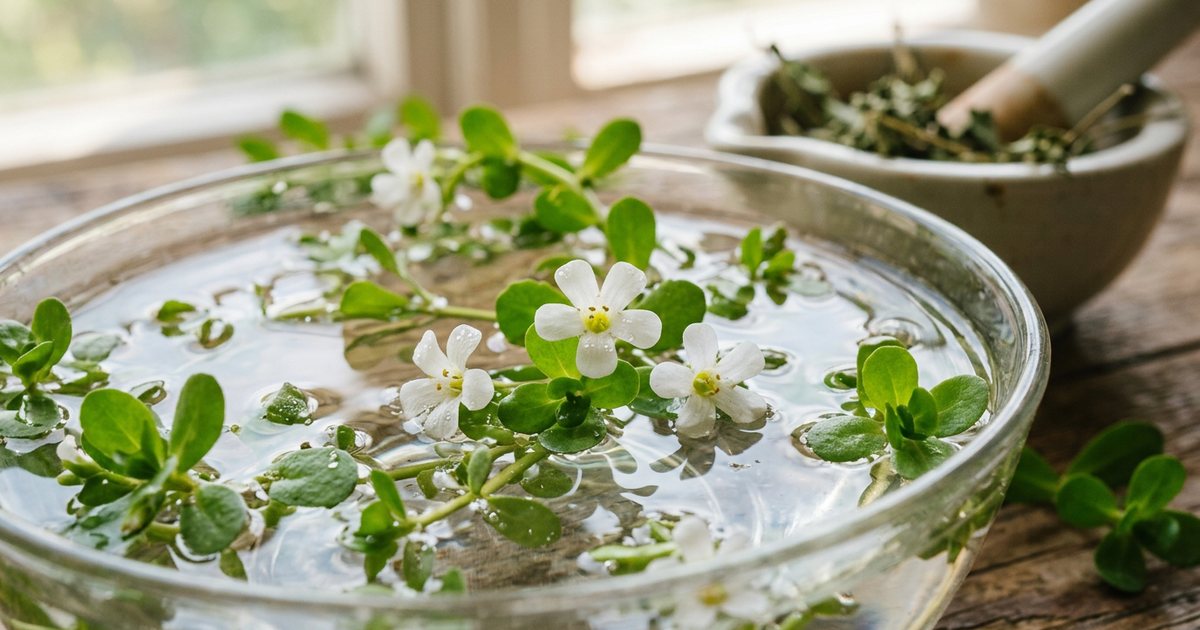
Relevance for Women in Midlife and Menopause
Midlife and the menopausal transition can bring about various changes, including those related to cognitive function and emotional well-being. Some women report experiencing ‘brain fog’ or changes in memory during this time. Given Bacopa monnieri’s traditional use for supporting cognitive health and modern research exploring its neuroactive effects, it has garnered interest as a botanical that might offer support during these years [6].

While not a substitute for medical care, understanding the long history of bacopa traditional uses and the current scientific exploration can provide women with information as they consider various options to support their well-being. Its potential to support cognitive processes, as suggested by both ancient practices and contemporary studies, makes it a subject of ongoing interest for those navigating midlife changes [2].
Bacopa Monnieri and the Broader Context of Well-being
The traditional use of Bacopa monnieri often emphasized its role in promoting overall mental and emotional balance, rather than just isolated cognitive improvements. This holistic perspective resonates with many women seeking comprehensive support during midlife. While research continues to define specific mechanisms, the historical understanding of Bacopa monnieri as a general tonic for the mind and nervous system remains a compelling aspect of its appeal.
Integrating knowledge of bacopa traditional uses with current scientific insights allows for a more rounded understanding of this herb. As research progresses, particularly in areas concerning its effects on cognitive function and neuroprotection, the relevance of Bacopa monnieri for supporting women’s health during midlife and menopause continues to be explored [4][5].


References
- Pharmacological attributes of Bacopa monnieri extract: Current updates and clinical manifestation. Frontiers in nutrition, 2022
- Bacopa monnieri: Preclinical and Clinical Evidence of Neuroactive Effects, Safety of Use and the Search for Improved Bioavailability. Nutrients, 2025
- Meta-analysis of randomized controlled trials on cognitive effects of Bacopa monnieri extract. Journal of ethnopharmacology, 2014
- Neuroprotection with Bacopa monnieri-A review of experimental evidence. Molecular biology reports, 2021
- Efficacy of Bacopa monnieri (Linn.) on Cognitive Function and Alterations in Blood Metabolites in Patients With Amnestic Mild Cognitive Impairment and Early Alzheimer Disease: Protocol for an Exploratory Double-Blind, Randomized, Placebo-Controlled Trial. JMIR research protocols, 2026
- Nootropic Herbs, Shrubs, and Trees as Potential Cognitive Enhancers. Plants (Basel, Switzerland), 2023
These statements have not been evaluated by the Food and Drug Administration. This information is not intended to diagnose, treat, cure, or prevent any disease. Content is for informational purposes only and is not medical advice; consult a qualified healthcare provider before starting any supplement. As an Amazon Associate we earn from qualifying purchases.
