Bacopa monnieri, often referred to as ‘Brahmi,’ is a perennial creeping herb that has been valued for centuries in traditional health practices. This plant is native to wetlands in regions like India, where it has a long history of use in Ayurvedic traditions.
Often categorized as a ‘nootropic’ herb, Bacopa monnieri is gaining interest for its potential support of cognitive functions. Understanding its origins and the components that make it unique can offer valuable insights into its potential benefits, particularly for women navigating midlife and menopause.
Bacopa Monnieri: A Plant with Deep Roots in Tradition
Bacopa monnieri is a small, succulent plant belonging to the plantain family. It thrives in marshy, wetland environments, commonly found across various parts of the world, including India, Nepal, Sri Lanka, China, and the southern United States. In traditional systems, particularly Ayurveda, Bacopa monnieri has been revered for its perceived effects on memory and learning [1].
The plant has been historically utilized for a variety of purposes beyond cognitive support. Traditional uses include applications for nervous system support and general well-being. Its deep roots in ancient health practices underscore its long-standing reputation as a valuable botanical.
The Active Compounds: Bacopa Saponins (Bacosides)
The primary active compounds believed to be responsible for many of Bacopa monnieri’s observed properties are a group of triterpenoid saponins, specifically bacosides [2]. These unique compounds are found within the plant and are often standardized in Bacopa monnieri extracts to ensure consistent potency. Different types of bacosides have been identified, contributing to the plant’s overall biochemical profile [2].
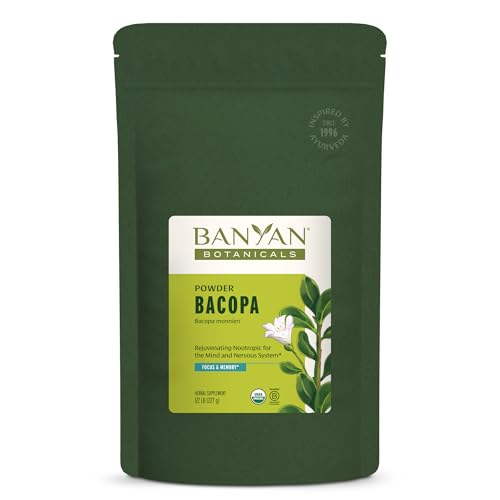
Research suggests that bacosides may interact with various biological pathways. These interactions are thought to be key to the herb’s potential influence on cognitive processes and neuroprotection [3]. Understanding the role of bacosides helps to clarify how Bacopa monnieri may exert its effects.
How Bacopa Monnieri May Support Cognitive Function
Bacopa monnieri is considered a nootropic herb, meaning it may support cognitive functions. Several mechanisms have been proposed to explain how it might exert these effects. One area of focus is its potential to influence neurotransmitter systems, which play a crucial role in communication within the brain. For instance, some research indicates Bacopa monnieri may modulate acetylcholine, a neurotransmitter important for learning and memory [4].
Beyond neurotransmitter modulation, Bacopa monnieri has been explored for its potential to support cellular health in the brain. Studies have investigated its influence on processes such as oxidative stress and inflammation, which can impact neuronal function and overall brain health [5]. By potentially supporting these cellular mechanisms, Bacopa monnieri may contribute to a more resilient cognitive environment [3].

A meta-analysis of randomized controlled trials on Bacopa monnieri extract indicated potential cognitive effects [6]. While individual responses can vary, this collective research suggests Bacopa monnieri may be a botanical worth considering for cognitive support, particularly for aspects like memory and learning [6].
Bacopa Monnieri and Neuroprotection
Emerging research has focused on Bacopa monnieri’s potential neuroprotective properties. Neuroprotection refers to mechanisms that help preserve the structure and function of neurons. Studies suggest that Bacopa monnieri may offer support against various factors that can impact brain cell health [3].

Specifically, Bacopa monnieri has been investigated for its potential to modulate oxidative stress, a process where an imbalance of free radicals can lead to cellular damage. By influencing antioxidant pathways, Bacopa monnieri may help to maintain cellular integrity in the brain [5]. Furthermore, its potential role in addressing inflammatory responses and mitochondrial dysfunction is also being explored as part of its neuroprotective profile [5]. These areas of research highlight Bacopa monnieri as a herb with multifaceted potential for supporting brain health.
Bacopa Monnieri in Midlife and Menopause
For women navigating midlife and menopause, cognitive changes can be a common concern. While these changes are a natural part of aging and hormonal shifts, supporting cognitive health becomes increasingly important. Bacopa monnieri, with its traditional use as a cognitive enhancer and emerging research on its potential mechanisms, may offer a botanical option to consider.
The potential influence of Bacopa monnieri on memory and learning, as well as its explored neuroprotective properties, aligns with the desire to maintain cognitive vitality during these life stages. While more specific research on Bacopa monnieri’s effects during menopause is ongoing, its general cognitive support profile makes it a herb of interest for overall brain well-being.


References
- Bacopa monnieri. 2012
- Dammarane triterpenoid glycosides in Bacopa monnieri: A review on chemical diversity and bioactivity. Phytochemistry, 2020
- Neuroprotection with Bacopa monnieri-A review of experimental evidence. Molecular biology reports, 2021
- Pharmacological attributes of Bacopa monnieri extract: Current updates and clinical manifestation. Frontiers in nutrition, 2022
- Investigating the Neuroprotective and Cognitive-Enhancing Effects of Bacopa monnieri: A Systematic Review Focused on Inflammation, Oxidative Stress, Mitochondrial Dysfunction, and Apoptosis. Antioxidants (Basel, Switzerland), 2024
- Meta-analysis of randomized controlled trials on cognitive effects of Bacopa monnieri extract. Journal of ethnopharmacology, 2014
These statements have not been evaluated by the Food and Drug Administration. This information is not intended to diagnose, treat, cure, or prevent any disease. Content is for informational purposes only and is not medical advice; consult a qualified healthcare provider before starting any supplement. As an Amazon Associate we earn from qualifying purchases.
