Ready to buy? Check current prices on Amazon and compare deals before you decide.
Navigating perimenopause can bring a range of changes, and for many women, shifts in cognitive function are a notable concern. Memory lapses, difficulty concentrating, and a general feeling of ‘brain fog’ are commonly reported experiences during this transitional phase.
As interest in natural approaches to well-being grows, bacopa monnieri and lion’s mane mushrooms have gained attention for their potential roles in supporting cognitive health. This article explores what we currently understand about these two botanicals, particularly in the context of perimenopause, emphasizing the importance of an evidence-based perspective.
Understanding Cognitive Changes in Perimenopause
Perimenopause, the years leading up to menopause, is characterized by fluctuating hormone levels, particularly estrogen. These hormonal shifts are thought to influence various bodily systems, including the brain. Many women report experiencing changes in memory, attention, and processing speed.
While these cognitive shifts are often temporary and resolve after menopause, they can be a source of frustration and impact daily life. These changes are measurable rather than purely subjective: longitudinal studies find small but reliable declines in objective memory performance as women move into perimenopause that advancing age alone does not explain, though for all but a very small number of women the scores stay within normal limits[1]. A systematic review and meta-analysis of cognition and mood across the perimenopausal transition reached the same broad picture[2]. Exploring ways to support cognitive well-being during this time is a common interest, leading many to look at natural options like bacopa monnieri and lion’s mane.
Bacopa Monnieri: A Traditional Herb for Cognitive Focus
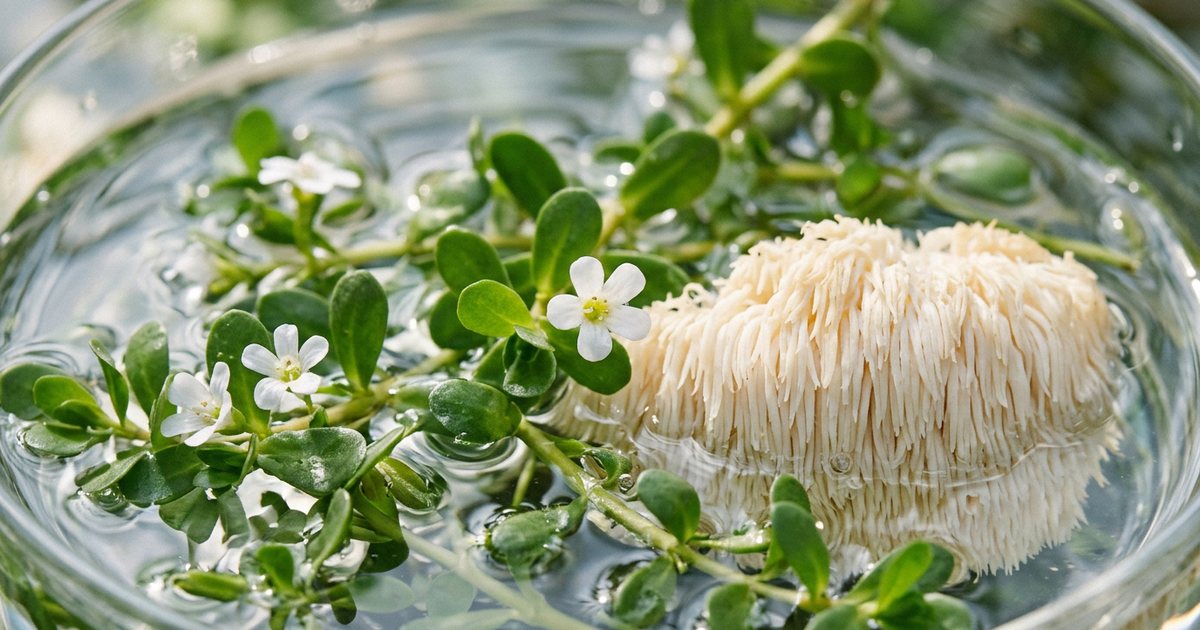
Bacopa monnieri is an herb with a long history of use in Ayurvedic tradition, where it has been valued for its potential to support memory and learning. Its active compounds, called bacosides, are thought to contribute to its observed effects. Research on bacopa has largely focused on its general cognitive support.

When considering bacopa in the context of perimenopause, it’s important to note that specific studies directly investigating bacopa’s effects on perimenopausal cognitive changes are limited. Most research has been conducted on broader populations, including healthy adults or older individuals, looking at aspects like memory recall, attention, and information processing speed. A meta-analysis of nine randomized placebo-controlled bacopa trials, each dosing for at least 12 weeks, found gains in speed of attention rather than across-the-board memory improvement[3], and one of the larger individual trials enrolled 98 healthy adults over 55, which is typical of the populations studied[4].
While some studies suggest bacopa may offer general cognitive benefits, more targeted research is needed to understand its specific relevance and potential efficacy for the unique cognitive challenges experienced during perimenopause. The mechanisms by which bacopa might exert its effects are thought to involve antioxidant activity and modulation of neurotransmitters, but how these specifically interact with perimenopausal hormonal changes is not yet well-understood.


Lion’s Mane Mushroom: Exploring Fungal Support
Lion’s mane (Hericium erinaceus) is an edible medicinal mushroom that has also garnered interest for its potential neurocognitive properties. Its compounds, such as hericenones and erinacines, are often highlighted for their potential to support nerve growth factor (NGF) production, which plays a role in the health and maintenance of neurons[5].

Similar to bacopa, the body of research specifically examining lion’s mane for cognitive support in perimenopausal women is very limited. Much of the existing research on lion’s mane has been conducted on animals or in human studies involving older adults or individuals with mild cognitive impairment, exploring areas like memory and mood. The most-cited human trial randomized Japanese adults aged 50 to 80 with mild cognitive impairment and reported improved scores on a dementia-screening scale while they were taking it[6], and a later randomized study tested a fruiting-body supplement over 12 weeks in cognitive testing[7].
The potential for lion’s mane to influence cognitive function is an area of ongoing investigation. While general cognitive support is often discussed, direct evidence for its specific benefits for the unique cognitive shifts during perimenopause, and how it interacts with fluctuating hormones, requires further dedicated study.
Bacopa vs. Lion’s Mane for Perimenopausal Cognition: What the Evidence Says
When directly comparing bacopa monnieri and lion’s mane for cognitive support specifically in perimenopause, it’s crucial to acknowledge the current state of research: there is very limited direct evidence for either botanical in this specific population. Both have shown promise in general cognitive support across various populations, but their targeted effects on perimenopausal brain fog or memory issues are not yet established.
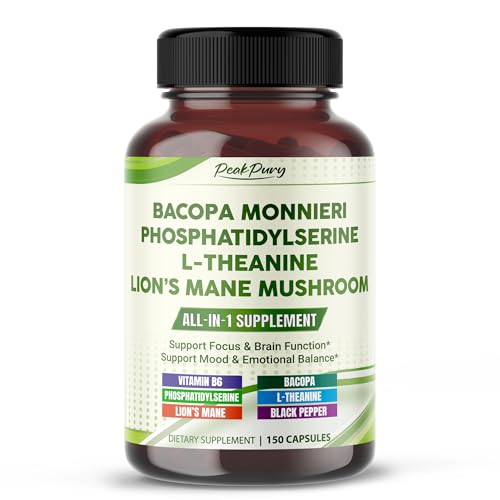
Neither bacopa nor lion’s mane has been extensively studied in clinical trials focusing on women experiencing perimenopausal cognitive changes. There is one small randomized trial of lion’s mane in menopausal women, and it is worth being precise about what it actually measured: 30 women ate lion’s mane or placebo cookies for four weeks, and the outcomes were depression, anxiety, sleep quality and general complaint scales, not cognitive testing[8]. That is evidence about mood in this population, not about memory, and it should not be cited as though it were the latter. Therefore, while both are popular for general cognitive well-being, drawing definitive conclusions about their comparative efficacy for bacopa vs lion’s mane perimenopause is not currently possible based on robust, specific evidence.
Women considering either bacopa or lion’s mane for perimenopausal cognitive support should understand that current recommendations are largely extrapolated from broader cognitive research, not from studies directly addressing their specific needs during this life stage. More research is needed to understand if and how these botanicals might offer targeted benefits during perimenopause.
Safety and Considerations for Midlife Women
Both bacopa monnieri and lion’s mane are generally considered well-tolerated by most individuals when taken within recommended dosages. However, as with any supplement, potential side effects can occur. Bacopa may sometimes cause digestive upset, such as nausea or stomach cramps, especially when taken on an empty stomach[9].
Lion’s mane is generally regarded as safe, with few reported side effects. However, individuals with mushroom allergies should exercise caution. It’s always advisable to start with a lower dose to assess tolerance and to be aware of how your body responds.
Given the hormonal fluctuations and other health considerations during perimenopause, it is especially important for women to discuss any new supplements, including bacopa or lion’s mane, with a healthcare provider. This is crucial to ensure they are appropriate for your individual health profile and to check for any potential interactions with medications or existing health conditions.
References
- Menopause and brain fog: how to counsel and treat midlife women. Menopause, 2024
- Cognition and mood in perimenopause: a systematic review and meta-analysis. Journal of Steroid Biochemistry and Molecular Biology, 2014
- Meta-analysis of randomized controlled trials on cognitive effects of Bacopa monnieri extract. Journal of Ethnopharmacology, 2014
- Does Bacopa monnieri improve memory performance in older persons? Results of a randomized, placebo-controlled, double-blind trial. Journal of Alternative and Complementary Medicine, 2010
- Neurotrophic and Neuroprotective Effects of Hericium erinaceus. International Journal of Molecular Sciences, 2023
- Improving effects of the mushroom Yamabushitake (Hericium erinaceus) on mild cognitive impairment: a double-blind placebo-controlled clinical trial. Phytotherapy Research, 2009
- Improvement of cognitive functions by oral intake of Hericium erinaceus. Biomedical Research, 2019
- Reduction of depression and anxiety by 4 weeks Hericium erinaceus intake. Biomedical Research, 2010
- Bacopa monnieri: Preclinical and Clinical Evidence of Neuroactive Effects, Safety of Use and the Search for Improved Bioavailability. Nutrients, 2025
These statements have not been evaluated by the Food and Drug Administration. This information is not intended to diagnose, treat, cure, or prevent any disease. Content is for informational purposes only and is not medical advice; consult a qualified healthcare provider before starting any supplement. As an Amazon Associate we earn from qualifying purchases.
