Navigating perimenopause often brings a range of changes, and for many women, sleep disturbances can be a significant concern. From difficulty falling asleep to waking frequently, these disruptions can impact daily well-being. As interest in natural approaches grows, some individuals look to herbal supplements like Bacopa monnieri for potential support.
Bacopa monnieri, an herb traditionally used in Ayurvedic practices, is often recognized for its potential cognitive benefits. However, its possible influence on sleep quality, particularly for women experiencing perimenopausal changes, is an area of ongoing research. This article explores what the current scientific evidence suggests regarding bacopa monnieri and sleep quality, emphasizing the limited nature of the available data in this specific context.
Understanding Perimenopausal Sleep Changes
Perimenopause is a transitional phase leading up to menopause, characterized by fluctuating hormone levels, particularly estrogen. These hormonal shifts can contribute to various symptoms, including hot flashes, night sweats, and mood changes, all of which can interfere with sleep patterns. Many women report increased instances of insomnia, fragmented sleep, and reduced overall sleep satisfaction during this time.
Addressing sleep quality during perimenopause is important for maintaining overall health and quality of life. While lifestyle adjustments are often a first step, some women explore complementary approaches, including herbal supplements, to support better rest. Understanding the potential role of bacopa monnieri in this context requires a careful review of the existing evidence.
Bacopa Monnieri: A Traditional Herb with Modern Interest
Bacopa monnieri, also known as Brahmi, has a long history of use in traditional Ayurvedic medicine, where it has been valued for its potential to support cognitive function and overall well-being. Modern research has begun to investigate some of these traditional uses, with a particular focus on its effects on memory and learning . The herb is also recognized as a functional leafy vegetable and medicinal herb, with ongoing comprehensive reviews exploring its scientific evidence and proposed mechanisms of action [1].

While much of the research on bacopa monnieri has concentrated on its cognitive aspects, there is emerging interest in other potential influences, including its interaction with the central nervous system and its possible relationship with circadian rhythm [1]. These broader areas of investigation provide a foundation for exploring whether bacopa monnieri might have an indirect or direct influence on sleep patterns.
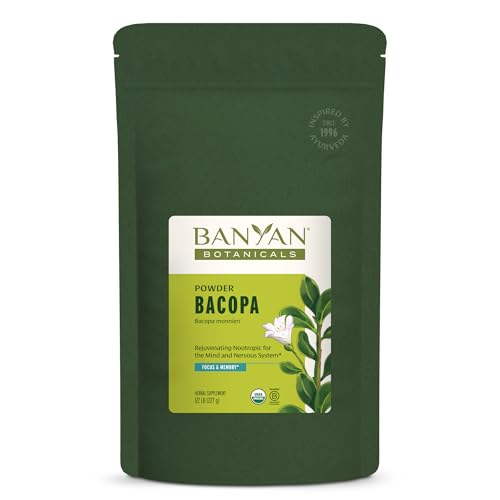
Direct Evidence on Bacopa Monnieri and Sleep Quality
When considering the specific question of bacopa monnieri’s impact on sleep quality, particularly for women in perimenopause, the direct evidence is limited. However, some studies have begun to explore this connection in other populations. For instance, a triple-blinded, randomized, placebo-controlled trial evaluated the effects of Bacopa monnieri on cognitive performance and sleep quality in patients with mild cognitive impairment. This study found that Bacopa monnieri supplementation was associated with an improvement in sleep quality within this specific group [2].

It is important to note that the findings from this study, while encouraging, are specific to a population with mild cognitive impairment and may not directly translate to healthy women experiencing perimenopause. The mechanisms by which bacopa monnieri might influence sleep quality are still being investigated, with proposed ideas including its potential effects on the circadian rhythm [1]. More research is needed to understand if these observed improvements in sleep quality extend to the perimenopausal population and through what specific pathways.
Broader Context: Bacopa Monnieri in Polyherbal Formulations and Stress
While direct studies on bacopa monnieri alone for perimenopausal sleep are scarce, it is sometimes found within polyherbal formulations. Systematic overviews have examined bacopa monnieri in dominant poly-herbal formulas, particularly in children and adolescents, focusing on various outcomes, though sleep quality was not a primary focus in these specific reviews [3]. Similarly, reviews of Ayurvedic Dravya-based herbal products, including those containing bacopa monnieri, have explored their potential for cognition, stress, sleep, and psychiatric symptoms. These broader analyses suggest that certain herbal combinations might offer support for sleep, but they do not isolate the effect of bacopa monnieri specifically on perimenopausal sleep [4].

Stress and anxiety can significantly impact sleep quality, and bacopa monnieri has been studied for its potential adaptogenic properties. If bacopa monnieri contributes to a sense of calm or helps manage stress, it could theoretically have an indirect positive influence on sleep. However, this is an area that requires more targeted research to establish a clear link, especially in the context of perimenopausal sleep disturbances. Herbal medicines, including bacopa monnieri, are also being explored for their therapeutic potential in neurodegenerative disorders and autism spectrum disorder, areas which sometimes have associated sleep challenges, but these are distinct from perimenopausal sleep concerns [5][6].
What We Don’t Know Yet: Gaps in the Evidence
Despite some promising early findings, there are significant gaps in our understanding of bacopa monnieri’s influence on sleep quality specifically for women in perimenopause. The existing studies are often conducted on different populations, such as individuals with mild cognitive impairment [2], which makes it challenging to draw direct conclusions for perimenopausal women.
Further research is needed to determine optimal dosages, potential interactions with hormone replacement therapy or other medications commonly used during perimenopause, and the long-term effects of bacopa monnieri supplementation on sleep in this specific demographic. While bacopa monnieri is being reviewed for its influence on circadian rhythm [1], more targeted studies are required to establish a direct link between this influence and improved sleep quality during perimenopause.


References
- Bacopa monnieri-A Functional Leafy Vegetable and Medicinal Herb: A Comprehensive Review of Scientific Evidence and Proposed Mechanisms Underlying Its Influence on Circadian Rhythm. Journal of medicinal food, 2026
- Evaluating the effects of Bacopa monnieri on cognitive performance and sleep quality of patients with mild cognitive impairment: A triple-blinded, randomized, placebo-controlled trial. Explore (New York, N.Y.), 2024
- Systematic Overview of Bacopa monnieri (L.) Wettst. Dominant Poly-Herbal Formulas in Children and Adolescents. Medicines (Basel, Switzerland), 2017
- Ayurvedic Dravya-Based Herbal Products for Cognition, Stress, Sleep, and Psychiatric Symptoms: A Node-Resolved Systematic Review and Meta-Analysis. Journal of integrative and complementary medicine, 2026
- Therapeutic Evaluation of Unani Medicine, Including Single Drugs and Polyherbal Formulations with Special Reference to Neurodegenerative Disorders. Alternative therapies in health and medicine, 2024
- Herbal Medicines in Autism Spectrum Disorder: Therapeutic Potential, Plant Components, and Dosage Guidelines. Alternative therapies in health and medicine, 2025
These statements have not been evaluated by the Food and Drug Administration. This information is not intended to diagnose, treat, cure, or prevent any disease. Content is for informational purposes only and is not medical advice; consult a qualified healthcare provider before starting any supplement. As an Amazon Associate we earn from qualifying purchases.
