As women navigate the shifts of perimenopause, many seek ways to support cognitive function. Bacopa monnieri, an herb traditionally used in Ayurvedic practices, has garnered interest for its potential role in this area. Understanding how to approach bacopa dosage during perimenopause is a common inquiry.
This article provides an evidence-based overview of bacopa monnieri, focusing on typical dosages explored in research for cognitive support. We aim to offer clear, balanced information to help you consider bacopa as part of your overall wellness strategy during this life stage.
Understanding Bacopa Monnieri and Cognitive Function
Bacopa monnieri is a nootropic herb that has been studied for its potential cognitive-enhancing effects [1]. Research suggests it may influence various aspects of cognitive performance, including memory [2]. While some studies have explored its potential in conditions like Alzheimer’s disease models [3][4], it’s important to note that the strength of evidence for such specific applications requires further high-quality research [5].
For women in perimenopause, supporting cognitive health often involves managing day-to-day mental clarity and memory. Bacopa monnieri has been observed to have antistress effects in some animal models, which could indirectly support cognitive function [6]. Some research also points to its potential in promoting healthy brain aging in animal studies [7].

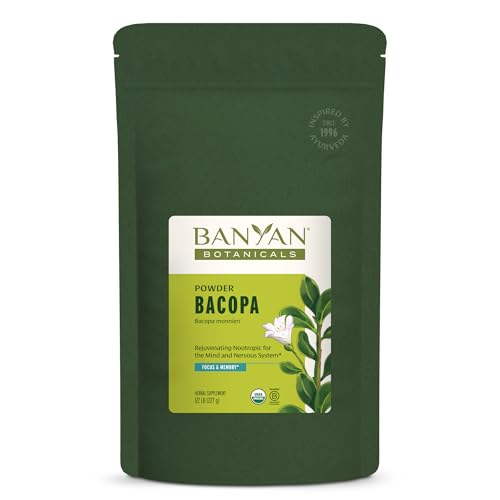
Typical Bacopa Dosage in Research for Cognitive Support
When considering bacopa dosage perimenopause, it’s helpful to look at the amounts used in human clinical trials. A common dosage range observed in studies for cognitive support is typically between 300 mg and 450 mg of a standardized extract daily [2].

For example, one randomized, double-blind, placebo-controlled trial involving elderly participants used a standardized Bacopa monnieri extract at 300 mg per day for 12 weeks, observing effects on cognitive performance, anxiety, and depression [8]. Other systematic reviews of randomized, controlled human clinical trials have also highlighted dosages within this general range when examining cognitive-enhancing effects [2].
It’s important to note that bacopa extracts are often standardized to contain a certain percentage of bacosides, which are believed to be the active compounds. The quality and standardization of the extract can influence its effects, regardless of the total milligram dosage. Always check the product label for information on standardization.
Factors to Consider for Bacopa Dosage During Perimenopause
While research provides a general range for bacopa dosage, individual responses can vary. Factors such as body weight, individual sensitivities, and concurrent use of other supplements or medications might influence how bacopa is tolerated or its perceived effects. No trial of bacopa has enrolled a perimenopausal cohort, so for this demographic specifically the evidence is not moderate, it is absent; the dosage ranges below come from trials in general adult populations and are applied here by extrapolation.

Consistency is often key with bacopa monnieri. Many studies involving cognitive benefits have administered the supplement over several weeks to months, suggesting that its effects may not be immediate [8]. Therefore, if you choose to incorporate bacopa, a sustained period of use, as directed by product guidelines, is typically recommended before evaluating its potential impact.

There is no specific evidence to suggest that women in perimenopause require a different bacopa dosage than other adult populations for cognitive support. The general research-backed dosages mentioned above serve as a starting point. However, individual health status during perimenopause, including any existing health conditions, should always be discussed with a healthcare provider.
Safety and Potential Interactions with Bacopa Monnieri
Bacopa monnieri is generally considered well-tolerated, with side effects, when they occur, often being mild gastrointestinal discomfort such as nausea or stomach upset [8]. However, every individual’s response to supplements can differ.
It is always prudent to be aware of potential interactions. While not extensively studied, bacopa monnieri might interact with certain medications. For example, some in silico (computer modeling) studies have explored phytocompounds, including bacosides, in relation to various signaling pathways [9][10]. However, these are not human clinical trials demonstrating direct drug interactions. Therefore, discussing bacopa use with a healthcare professional is crucial, especially if you are taking any prescription medications or have underlying health conditions.
References
- Nootropic Herbs, Shrubs, and Trees as Potential Cognitive Enhancers. Plants (Basel, Switzerland), 2023
- The cognitive-enhancing effects of Bacopa monnieri: a systematic review of randomized, controlled human clinical trials. Journal of alternative and complementary medicine (New York, N.Y.), 2012
- Cognitive enhancement and neuroprotective effects of Bacopa monnieri in Alzheimer’s disease model. Journal of ethnopharmacology, 2010
- Use of Bacopa monnieri in the Treatment of Dementia Due to Alzheimer Disease: Systematic Review of Randomized Controlled Trials. Interactive journal of medical research, 2022
- Importance of high-quality evidence regarding the use of Bacopa monnieri in dementia. Frontiers in aging neuroscience, 2023
- Antistress effects of bacosides of Bacopa monnieri: modulation of Hsp70 expression, superoxide dismutase and cytochrome P450 activity in rat brain. Phytotherapy research : PTR, 2002
- Prevention of age-associated neurodegeneration and promotion of healthy brain ageing in female Wistar rats by long term use of bacosides. Biogerontology, 2012
- Effects of a standardized Bacopa monnieri extract on cognitive performance, anxiety, and depression in the elderly: a randomized, double-blind, placebo-controlled trial. Journal of alternative and complementary medicine (New York, N.Y.), 2008
- p62/SQSTM1 signaling nexus and orchestration of ERK and mTOR pathways are crucial for Bacoside A- induced autophagy-mediated apoptosis in chronic myelogenous leukemia. Archives of pharmacal research, 2025
- In silico docking of phytocompounds to identify potent inhibitors of signaling pathways involved in prostate cancer. Journal of biomolecular structure & dynamics, 2021
These statements have not been evaluated by the Food and Drug Administration. This information is not intended to diagnose, treat, cure, or prevent any disease. Content is for informational purposes only and is not medical advice; consult a qualified healthcare provider before starting any supplement. As an Amazon Associate we earn from qualifying purchases.
