As women navigate midlife and the menopausal transition, maintaining optimal cognitive function often becomes a focus. The brain‘s intricate network of neurotransmitters plays a vital role in processes like memory, attention, and learning. One such crucial system is the cholinergic system.
Bacopa monnieri, an herb traditionally used in Ayurvedic practices, has garnered scientific attention for its potential to interact with this cholinergic system. Understanding this interaction may offer insights into how Bacopa monnieri could support aspects of cognitive well-being during these life stages.
Understanding the Cholinergic System
The cholinergic system is a network in the brain that primarily uses acetylcholine as its neurotransmitter. Acetylcholine is involved in various cognitive functions, including memory formation, learning, and attention. Maintaining healthy cholinergic activity is considered important for these processes.
Disruptions to the cholinergic system are sometimes observed in conditions affecting cognitive function. Therefore, compounds that interact favorably with this system are of interest for their potential to support brain health.
Bacopa Monnieri’s Interaction with Cholinergic Pathways
Research suggests that Bacopa monnieri may influence the cholinergic system through several mechanisms. One area of interest is its potential effect on acetylcholinesterase, an enzyme responsible for breaking down acetylcholine in the brain. By potentially influencing this enzyme, Bacopa monnieri could support acetylcholine availability [1].

Studies in animal models have indicated that Bacopa monnieri may help ameliorate memory deficits, with possible involvement of both glutamatergic and cholinergic systems [2]. Further computational studies have explored how natural compounds from Bacopa monnieri might interact with targets relevant to the cholinergic system [3].
In healthy elderly volunteers, 12 weeks of Bacopa monnieri consumption was associated with effects on attention, cognitive processing, working memory, and functions of both cholinergic and monoaminergic systems [4]. This suggests a broader influence beyond a single pathway.

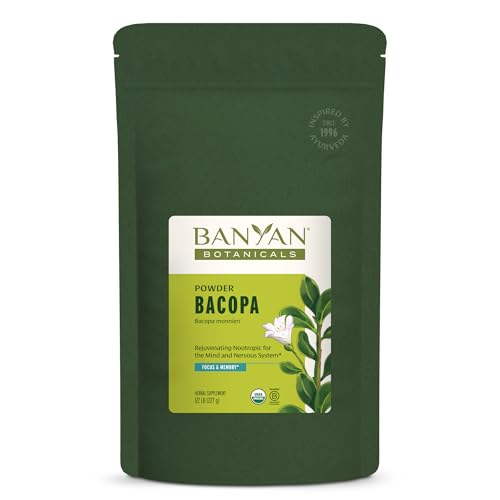
Supporting Cognitive Processes Through Cholinergic Function
The connection between Bacopa monnieri and the cholinergic system is often explored in the context of cognitive support. For example, in animal models relevant to cognitive decline, Bacopa monnieri has shown cognitive enhancement and neuroprotective effects, potentially by influencing the cholinergic system [5].
Another study in female Wistar rats indicated that long-term use of bacosides, active compounds in Bacopa monnieri, was associated with the prevention of age-associated neurodegeneration and promotion of healthy brain aging [6]. While not explicitly detailing cholinergic mechanisms in this specific study, it highlights a broader neurosupportive role.

In contexts such as epilepsy models, Bacopa monnieri has been investigated for its potential to modulate brain activity, with reference to the cholinergic system and ATPases [7]. Another study in epileptic rats explored its effect on excitability and metabolism, again highlighting its potential systemic influence [8].

Broader Applications and Future Directions
Beyond direct cholinergic modulation, Bacopa monnieri’s bioactive compounds are being investigated for their potential applications in areas like supporting brain health, as noted in broader reviews on plant compounds [9]. This suggests a continued interest in its multifaceted interactions within the brain.
The research collectively points to Bacopa monnieri as an herb with a complex interaction profile within the brain, including notable effects on cholinergic function. These interactions may contribute to its observed cognitive support in various research settings, making it a subject of ongoing interest for those seeking to maintain brain health.
References
- In Silico and In Vitro Analysis of Bacoside A Aglycones and Its Derivatives as the Constituents Responsible for the Cognitive Effects of Bacopa monnieri. PloS one, 2015
- Bacopa monnieri ameliorates memory deficits in olfactory bulbectomized mice: possible involvement of glutamatergic and cholinergic systems. Neurochemical research, 2013
- A Computational Study of Natural Compounds from Bacopa monnieri in the Treatment of Alzheimer’s Disease. Current pharmaceutical design, 2020
- Effects of 12-Week Bacopa monnieri Consumption on Attention, Cognitive Processing, Working Memory, and Functions of Both Cholinergic and Monoaminergic Systems in Healthy Elderly Volunteers. Evidence-based complementary and alternative medicine : eCAM, 2012
- Cognitive enhancement and neuroprotective effects of Bacopa monnieri in Alzheimer’s disease model. Journal of ethnopharmacology, 2010
- Prevention of age-associated neurodegeneration and promotion of healthy brain ageing in female Wistar rats by long term use of bacosides. Biogerontology, 2012
- Antiepileptic potential of Bacopa monnieri in the rat brain during PTZ-induced epilepsy with reference to cholinergic system and ATPases. Journal of traditional and complementary medicine, 2021
- Increased excitability and metabolism in pilocarpine induced epileptic rats: effect of Bacopa monnieri. Fitoterapia, 2010
- Advances in Bioactive Compounds from Plants and Their Applications in Alzheimer’s Disease. Biomolecules, 2025
These statements have not been evaluated by the Food and Drug Administration. This information is not intended to diagnose, treat, cure, or prevent any disease. Content is for informational purposes only and is not medical advice; consult a qualified healthcare provider before starting any supplement. As an Amazon Associate we earn from qualifying purchases.
