For women navigating midlife and menopause, understanding the various forms of dietary supplements is an important aspect of informed self-care. Bacopa monnieri, an herb traditionally used for cognitive support, is available in several formats, each with its own characteristics.
While capsules are a common and convenient option, exploring bacopa monnieri forms such as powders, liquids, and teas can offer different ways to incorporate this botanical into a daily routine. This article will delve into these different preparations, providing an evidence-based overview without making health claims.
Bacopa Monnieri in Powder Form: Versatility and Traditional Use
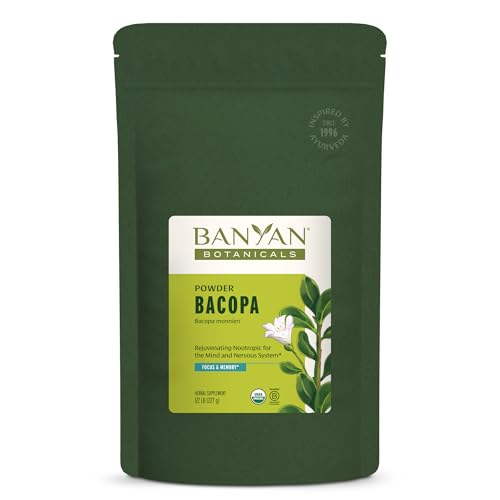
Bacopa monnieri powder represents a fundamental way to consume this herb, often reflecting its traditional use. In research settings, bacopa monnieri leaf powder has been used to investigate its potential effects. For instance, prophylactic treatment with Bacopa monnieri leaf powder was studied in Drosophila melanogaster and was observed to mitigate paraquat-induced oxidative perturbations and lethality [1]. This highlights the direct application of the powdered form in scientific inquiry.
The powdered form offers versatility, as it can be mixed into various foods and beverages. This allows for customization of dosage and integration into different dietary preferences. While specific studies on human absorption rates for bacopa powder versus other forms are not provided in the evidence, the direct use of powder in research suggests its bioavailability for study purposes.
When considering bacopa monnieri powder, it’s important to be aware of the source and purity. As with any botanical product, quality control can influence the consistency of the preparation. The convenience of powder can be appealing for those who prefer to avoid capsules or wish to blend the herb into smoothies, yogurts, or other recipes.
Liquid Bacopa Monnieri Extracts: Absorption Considerations
Liquid bacopa monnieri extracts, often tinctures or concentrated solutions, offer an alternative to powders and capsules. These preparations involve extracting the active compounds, such as bacosides, into a liquid medium, typically alcohol or glycerin. The liquid format might offer different absorption dynamics compared to solid forms, though published research does not directly compare human absorption rates across different forms.
The formulation of liquid systems can be complex, with research exploring various methods to enhance delivery. For example, studies have investigated ternary systems of bacogenins with fulvic acid and hydrogenated soy lecithin to prepare and characterize these compounds, including in vivo studies [2]. Another area of research involves nanoformulations, such as those targeting neuroprotective compounds, which could potentially influence the delivery of plant-derived compounds [3]. While these studies point to advanced formulation techniques, they do not directly compare a standard liquid extract to other common forms.

Liquid extracts can be appealing for individuals who have difficulty swallowing capsules or prefer a faster intake method. The concentration of active compounds can vary significantly between different liquid products, making it important to review product labels carefully. The precise dosage and consistency of liquid forms are key considerations for those exploring this option.
Bacopa Monnieri Teas and Infusions: A Traditional Approach
Preparing bacopa monnieri as a tea or infusion is a more traditional method of consumption, akin to how many herbal remedies have been used for centuries. This involves steeping dried bacopa leaves or powder in hot water to create an herbal beverage. While published research does not specifically detail studies on bacopa monnieri tea in human subjects, the general principle of aqueous extraction is well-established in herbalism.
The process of creating a tea involves a simpler extraction compared to concentrated liquid extracts, and the resulting beverage might have a lower concentration of active compounds per serving. However, this method can offer a more gentle and enjoyable way to consume the herb, integrating it into a mindful daily ritual. The flavor profile of bacopa monnieri, which can be somewhat bitter, might be a consideration for those choosing this form.

It’s worth noting that research on bacopa monnieri has explored its effects on various biological markers. For instance, bacopa monnieri was found to modulate endogenous cytoplasmic and mitochondrial oxidative markers in prepubertal mice brain [4]. Additionally, neuroprotective effects of Bacopa monnieri have been observed in experimental models of dementia [5]. These findings, while not specific to tea, highlight the potential areas of interest for this herb. The tea form offers a way to consume bacopa monnieri in a diluted, perhaps more palatable, format.
Emerging and Advanced Bacopa Monnieri Formulations
Beyond the more common forms, scientific research is continuously exploring advanced delivery systems for bacopa monnieri compounds. These innovative formulations aim to optimize the stability, bioavailability, and targeted delivery of active ingredients. For example, studies have focused on the characterization of withanolides and bacoside A-loaded proniosomes, examining their effects on oxidative stress and survival under hypergravity in a rodent model [6]. This kind of research indicates a move towards more sophisticated drug delivery methods.
Another area of advancement includes the development of thermosensitive in-situ nasal gels loaded with Bacoside A. Such formulations are being optimized and characterized in-vivo for potential applications, such as in the treatment of epilepsy [7]. While these are highly specialized and not widely available consumer products, they illustrate the ongoing scientific interest in optimizing bacopa monnieri compounds for specific applications.

These advanced formulations highlight the complexity involved in maximizing the therapeutic potential of botanical compounds. For the average consumer, while these specific formulations are not readily accessible, they underscore the scientific rigor applied to understanding and enhancing the delivery of bacopa monnieri’s active components. The ongoing research suggests a future where even more targeted and efficient forms of bacopa monnieri might become available.


References
- Prophylactic treatment with Bacopa monnieri leaf powder mitigates paraquat-induced oxidative perturbations and lethality in Drosophila melanogaster. Indian journal of biochemistry & biophysics, 2010
- Ternary System of Bacogenins with Fulvic Acid and Hydrogenated Soy Lecithin: Preparation, Characterization and, In vivo Studies. Current topics in medicinal chemistry, 2022
- Plant-derived neuroprotective compounds and nanoformulations targeting Parkinson’s disease: a semi-systematic review of mechanisms and therapeutic potential. Metabolic brain disease, 2026
- Bacopa monnieri modulates endogenous cytoplasmic and mitochondrial oxidative markers in prepubertal mice brain. Phytomedicine : international journal of phytotherapy and phytopharmacology, 2011
- Neuroprotective effects of Bacopa monnieri in experimental model of dementia. Neurochemical research, 2012
- Characterization of withanolides and bacoside A-loaded proniosomes: effect on oxidative stress and survival under hypergravity in rodent model. Drug development and industrial pharmacy, 2023
- Formulation, Optimization and In-Vivo Characterization of Thermosensitive In-Situ Nasal Gel Loaded with Bacoside a for Treatment of Epilepsy. AAPS PharmSciTech, 2024
These statements have not been evaluated by the Food and Drug Administration. This information is not intended to diagnose, treat, cure, or prevent any disease. Content is for informational purposes only and is not medical advice; consult a qualified healthcare provider before starting any supplement. As an Amazon Associate we earn from qualifying purchases.
