Bacopa monnieri is an herb that has garnered interest for its potential role in supporting cognitive function. For women navigating midlife and menopause, maintaining cognitive clarity can be a priority, making understanding how to best incorporate such supplements valuable.
While the benefits of Bacopa monnieri are being explored, practical aspects like timing of intake can influence its absorption and potential effectiveness. This article aims to provide evidence-based insights into when to consider taking Bacopa monnieri to potentially optimize its benefits for cognitive support.
Understanding Bacopa Monnieri’s Absorption Profile
The effectiveness of any supplement is closely linked to how well its active compounds are absorbed by the body. Bacopa monnieri contains active compounds known as bacosides, which are believed to be responsible for many of its observed effects [1].
Bacosides are triterpenoid saponins, sugar-bearing molecules rather than fat-soluble ones, and they are not absorbed the way the fat-soluble vitamins are. Reviews of bacopa treat its bioavailability as an unsolved formulation problem rather than something a fatty meal fixes [1].
No published human trial has compared the absorption of Bacopa monnieri taken with food against taking it on an empty stomach. Taking it with a meal is still sensible for people whose stomachs object to it, but that is a tolerability measure and should not be described as an absorption benefit [1].


Considering Timing for Cognitive Support
For those interested in Bacopa monnieri for cognitive support, the duration of its potential effects and cumulative nature are important considerations. Unlike some supplements that provide immediate effects, the cognitive benefits associated with Bacopa monnieri are often reported to emerge with consistent, long-term use, rather than from a single dose [1].

This suggests that maintaining a consistent intake, rather than focusing on a specific ‘peak performance’ window after a single dose, may be more relevant. Therefore, establishing a regular routine that aligns with personal habits could be more impactful than trying to time it for an immediate effect for a specific cognitive task.
Some individuals may prefer taking Bacopa monnieri in the morning to align with the start of their day’s cognitive activities, while others might find it easier to remember to take it with an evening meal. The key appears to be consistency over time for potential cognitive benefits [1].
Morning vs. Evening: Practical Considerations
When deciding between morning or evening intake, practical factors often play a role. Taking Bacopa monnieri in the morning, potentially with breakfast, can align with the suggestion of taking it with food to aid absorption. This also allows for an easy integration into a daily routine.

Alternatively, taking Bacopa monnieri with an evening meal could also be a suitable option. If an individual has a more substantial dinner that includes dietary fats, this could similarly support the absorption of bacosides. Some individuals prefer taking supplements in the evening as part of a winding-down routine.
There is no strong evidence to suggest that Bacopa monnieri has stimulating or sedating properties that would strongly favor morning or evening intake for sleep or wakefulness. The primary consideration remains consistent intake and potential absorption, which can be achieved at various times depending on personal preference and meal patterns.
Consistency is Key for Potential Benefits
Regardless of whether Bacopa monnieri is taken in the morning or evening, the moderate evidence available suggests that consistent, long-term use may be important for observing potential cognitive support [1]. This means that finding a time of day that allows for regular, uninterrupted intake is likely more critical than the exact hour it is consumed.
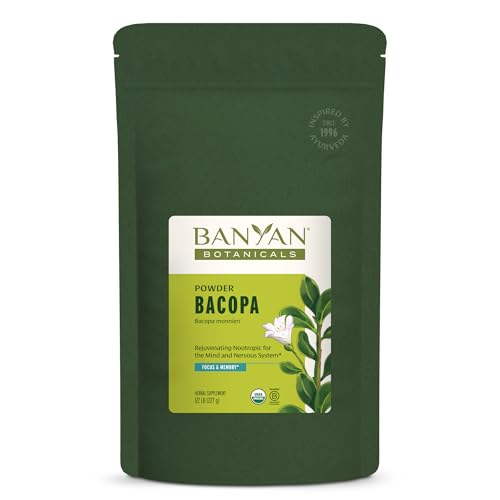
Developing a routine, such as taking it with a specific meal each day, can help ensure this consistency. For women in midlife and menopause, who may be managing multiple commitments, integrating supplement intake into an already established daily rhythm can be a practical strategy for adherence.
Safety Considerations and Interactions
While Bacopa monnieri is generally considered to have a good safety profile, it’s always important to be mindful of potential interactions, especially for those taking other medications. Some adaptogens, a category that Bacopa monnieri is sometimes grouped with, have been reviewed for interactions with antidepressant drugs [2], though specific interactions involving Bacopa monnieri are not well documented.
Bacopa monnieri has also been studied for its trace metal accumulation, highlighting the importance of sourcing from reputable suppliers to minimize potential exposure to contaminants [3].
It is always advisable to discuss any new supplement, including Bacopa monnieri, with a healthcare provider, particularly if you are on other medications or have underlying health conditions. This is a general health information article and should not be considered medical advice.
References
- Bacopa monnieri: Preclinical and Clinical Evidence of Neuroactive Effects, Safety of Use and the Search for Improved Bioavailability. Nutrients, 2025
- Harder, better, faster, stronger? Retrospective chart review of adverse events of interactions between adaptogens and antidepressant drugs. Frontiers in pharmacology, 2023
- Trace metals accumulation in Bacopa monnieri and their bioaccessibility. Planta medica, 2013
These statements have not been evaluated by the Food and Drug Administration. This information is not intended to diagnose, treat, cure, or prevent any disease. Content is for informational purposes only and is not medical advice; consult a qualified healthcare provider before starting any supplement. As an Amazon Associate we earn from qualifying purchases.
