Ready to buy? Check current prices on Amazon and compare deals before you decide.
The journey through perimenopause often brings with it a frustrating constellation of cognitive changes: the elusive word on the tip of your tongue, the forgotten appointment, and a general sense of mental fogginess. For many women aged 40-55, these shifts aren’t just an inconvenience; they can impact daily life and career. Simultaneously, biohackers and individuals seeking to optimize their cognitive function are constantly evaluating natural supplements for their proven efficacy.
Bacopa monnieri, also known as Brahmi, has long been revered in Ayurvedic tradition for its memory-enhancing properties. But in the modern age, what does robust scientific research actually show about this ancient herb? This comprehensive guide, updated for 2026, explores the evidence-based benefits of Bacopa monnieri, particularly for memory, anxiety, and the unique cognitive challenges presented by perimenopause.
Disclosure: This article contains affiliate links. If you make a purchase through these links, BacopaHub may earn a small commission at no extra cost to you.
Understanding Bacopa Monnieri: The Active Compounds
Bacopa monnieri’s therapeutic effects are primarily attributed to a class of compounds called bacosides. These triterpenoid saponins are believed to be responsible for the herb’s neuroprotective, adaptogenic, and cognitive-enhancing properties.
Specifically, bacosides A and B are among the most studied. They are thought to influence neurotransmitter systems, promote neuronal communication, and offer antioxidant protection within the brain. The quality and standardization of bacoside content are crucial for a supplement’s effectiveness.
Bacopa and Memory Enhancement: What the Studies Say
One of the most well-researched benefits of Bacopa monnieri is its potential to improve memory and learning. Numerous human clinical trials have investigated its impact on various aspects of cognitive function, particularly in healthy adults and older populations.
Working Memory and Information Processing
The working memory evidence is real but dose-dependent, and less consistent than supplement marketing suggests. A 2026 network meta-analysis of 29 randomised trials covering 2,107 healthy adults found that only high-dose bacopa, at or above 600 mg per day, significantly outperformed placebo on working memory[1]; doses of 300 to under 600 mg per day did not separate from placebo on that measure. A 12-week trial in 60 healthy elderly volunteers taking 300 or 600 mg daily similarly reported improved working memory alongside faster event-related potential latencies[2]. Set against that, a review of the available clinical data concluded the improvements seen in healthy subjects were not statistically robust, because no two studies found significant changes on the same pair of tests[3]. Two claims you will see repeated elsewhere do not survive contact with the trials. Immediate and short-term recall were explicitly unchanged in a 76-person study of adults aged 40 to 65[4] and on the immediate working-memory subtest of a 12-week trial in adults aged 65 and over[5]. And processing speed showed no significant advantage in the 2026 network meta-analysis[1], even though an earlier meta-analysis of nine trials did find a faster speed of attention[6].
The proposed mechanism involves bacosides enhancing synaptic activity and promoting dendritic proliferation, which strengthens neural connections. It is important to note that these benefits typically manifest after 8-12 weeks of consistent daily use, not immediately.
Long-Term Memory and Recall
This is the most consistently replicated finding in the human literature, and it is worth separating from the noisier working-memory results. In a double-blind trial of 76 adults aged 40 to 65, bacopa did not speed up learning at all; what it did was slow the rate of forgetting of newly acquired information[4]. A 12-week trial in 54 adults aged 65 and over found improved delayed word recall on the Rey Auditory Verbal Learning Test[5], and a separate 12-week trial in 98 adults over 55 found improved verbal learning, memory acquisition and delayed recall on the same instrument[7]. Retention of new information, rather than immediate recall or raw learning speed, is where the evidence is strongest.
This effect is thought to be mediated by Bacopa’s ability to modulate acetylcholine levels, a neurotransmitter critical for memory and learning. Again, these benefits are cumulative and require a commitment to consistent daily intake for several months.


Bacopa for Anxiety and Stress Reduction
The adaptogenic properties of Bacopa monnieri extend to its capacity for managing stress and reducing anxiety. This is particularly relevant for women experiencing the heightened emotional fluctuations often associated with perimenopause.
Modulating Stress Response
Bacopa appears to help the body adapt to various stressors by influencing the hypothalamic-pituitary-adrenal (HPA) axis, the body’s central stress response system. The direct human evidence for a cortisol effect is thinner than that phrasing usually implies, and it is acute rather than chronic: a crossover study gave 17 healthy volunteers 320 mg or 640 mg and measured lower salivary cortisol along with some positive mood effects during a multitasking stress task, and its authors called for replication in a larger sample before the size of that effect is claimed[8].
The anxiety results are split, and knowing that is more useful than reading only the positive half. A 12-week placebo-controlled trial in adults aged 65 and over found combined state and trait anxiety scores, depression scores and heart rate all fell in the bacopa group while rising in the placebo group[5]. A separate three-month trial in adults aged 40 to 65 measured anxiety the same way and found it unchanged[4]. Treat a calming effect as plausible and reported, not as a settled result you should expect.
Neurotransmitter Balance for Mood
The herb’s influence on neurotransmitters such as serotonin and GABA also plays a role in its anxiolytic effects. By promoting a healthy balance of these brain chemicals, Bacopa can contribute to a more stable and positive mood.
Consistent use over 8-12 weeks is essential for experiencing these mood-stabilizing and anxiety-reducing benefits. Think of it as a gradual recalibration rather than an immediate fix.
Bacopa and Perimenopausal Brain Fog
Perimenopausal brain fog is a common and distressing symptom, characterized by difficulty concentrating, memory lapses, and reduced mental clarity. While the exact mechanisms are complex and involve hormonal fluctuations, Bacopa may offer support.
Addressing Underlying Cognitive Deficits
Here the honest position matters more than the optimistic one: no controlled trial has enrolled perimenopausal women and measured bacopa against their cognitive symptoms. The nearest evidence is a trial in adults aged 40 to 65, an age band that overlaps perimenopause but was neither selected for it nor analysed by menopausal status, and it found slower forgetting of new information while leaving attention and short-term memory unchanged[4]. Everything else in the memory literature comes from adults over 55 or over 65[5][7]. Applying those results to perimenopausal brain fog is a reasonable extrapolation, not a demonstrated effect.
Furthermore, its neuroprotective properties may help support brain health during a period of significant hormonal change. Women seeking relief from brain fog should anticipate needing 8-12 weeks of consistent Bacopa supplementation to observe noticeable improvements.
Indirect Benefits via Stress Reduction
The anxiety and stress-reducing effects of Bacopa can indirectly alleviate brain fog. High stress levels exacerbate cognitive difficulties, so by promoting a calmer mental state, Bacopa can create a more conducive environment for clear thinking.
Managing the emotional roller coaster of perimenopause is a key component in addressing cognitive symptoms, and Bacopa offers a gentle, natural approach. Patience and consistent daily intake are paramount for these effects.
Bacopa as a Nootropic: Comparing Natural Options
For biohackers and individuals exploring natural nootropics, Bacopa Monnieri stands out due to its well-established safety profile and extensive research. One caveat belongs here rather than in the small print, because it is the side effect that actually turns up in trials: digestive upset. The 98-person trial reported bacopa causing increased stool frequency, abdominal cramps and nausea relative to placebo[7], and the 54-person trial in older adults recorded stomach upset as its main adverse event[5]. It is usually mild and taking bacopa with food helps, but it is the most common reason people stop. It offers a distinct set of benefits compared to other popular cognitive enhancers.

Bacopa vs. Other Nootropics
| Nootropic | Primary Benefits | Onset of Effects | Key Mechanisms |
|---|---|---|---|
| Bacopa Monnieri | Memory, learning, anxiety reduction, stress adaptation | 8-12 weeks (gradual) | Neurotransmitter modulation (acetylcholine, serotonin, GABA), neuroprotection, synaptic plasticity |
| L-Theanine | Relaxation, focus, reduced anxiety without sedation | 30-60 minutes (acute) | Increases alpha brain waves, modulates neurotransmitters (GABA, dopamine, serotonin) |
| Creatine | ATP energy production, short-term memory, brain fog reduction | Days to weeks (cumulative) | Increases brain energy reserves, supports neuronal function |
| Rhodiola Rosea | Stress reduction, fatigue relief, mood enhancement | Days to weeks (cumulative) | Adaptogenic, modulates stress response, neurotransmitter balance |
Bacopa’s strength lies in its long-term, foundational support for memory, learning, and stress resilience. Unlike some acute-acting nootropics, its benefits build over time, making it an excellent choice for sustained cognitive improvement.
For those seeking immediate effects, stacking Bacopa with something like L-Theanine might be considered, but Bacopa itself requires consistent, patient use to yield its full potential.

Finding the Right Bacopa Supplement (Affiliate Section)
When searching for a Bacopa monnieri supplement, quality and standardization are paramount to ensure you’re getting an effective product. The market offers various formulations, and understanding what to look for can guide your choice.
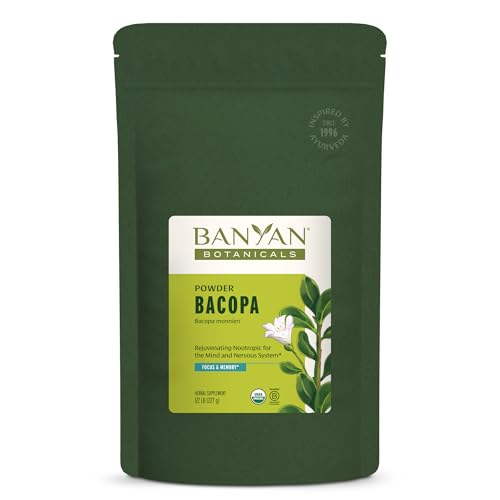
Consider supplements that clearly state the percentage of bacosides, the active compounds. Look for products standardized to at least 20% bacosides, though higher percentages like 40% or 50% are often preferred for optimal efficacy. This ensures a consistent and potent dose with each serving.
Another important factor is the form of the supplement. You’ll find Bacopa available in capsule, tablet, and sometimes liquid extract forms. Capsules are generally the most common and convenient, often designed for easy daily integration. Consider the dosage per serving against what the trials actually used, and watch the units, because this is where labels mislead. The controlled trials above dosed 300 mg per day of standardized extract[5][7], or 150 mg of extract twice daily[9], with 300 and 600 mg per day compared directly in the elderly working-memory trial[2]. That is milligrams of extract, not milligrams of bacosides. At the 55% standardization described above, a 300 mg capsule carries roughly 165 mg of bacosides, so a target expressed in bacosides is several times higher than it looks.
Finally, always prioritize supplements from reputable brands that provide third-party testing for purity and potency. This ensures the product is free from contaminants and accurately contains the ingredients listed on the label. Searching for terms like “standardized Bacopa extract” or “Bacopa monnieri 20% bacosides” can help narrow down your options on platforms like Amazon.

Conclusion: The Patience of Proven Benefits
The scientific evidence supporting Bacopa monnieri’s benefits for memory, learning, and anxiety reduction is substantial and growing. For women navigating the cognitive shifts of perimenopause, or biohackers seeking a foundational nootropic, Bacopa offers a compelling natural option.
However, the key takeaway from all research is clear: Bacopa is not a quick fix. Its powerful effects on brain health, mood, and cognitive function are cumulative and require consistent daily use for a minimum of 8-12 weeks before significant improvements are typically observed. Embrace this journey with patience, and the benefits of this ancient herb can genuinely support your cognitive well-being.
Frequently Asked Questions about Bacopa Monnieri
Bacopa Monnieri’s benefits are cumulative, meaning they build up over time. Most studies indicate that noticeable improvements in memory, learning, and anxiety reduction typically occur after 8-12 weeks of consistent daily supplementation.
A common effective dose for a standardized extract (containing 20-50% bacosides) is typically between 300 mg and 450 mg daily[10]. The 150 mg figure that circulates online is a per-capsule amount from a trial that gave it twice a day, not a daily total. Always follow the specific dosage instructions on your chosen supplement and consult with a healthcare professional.
Yes, Bacopa’s proven benefits for memory, focus, and anxiety reduction can directly address many symptoms associated with perimenopausal brain fog. Its adaptogenic properties also help manage stress, which can exacerbate cognitive difficulties.
Bacopa is generally well-tolerated. Some individuals may experience mild gastrointestinal upset, such as nausea or stomach cramps, especially when taken on an empty stomach. Taking it with food can often mitigate these effects.

Yes, Bacopa Monnieri has a long history of safe use, particularly in Ayurvedic medicine, and modern research supports its long-term safety when taken at recommended dosages. Consistent, long-term use is actually necessary for its full benefits.
While generally safe, it’s always advisable to consult with your healthcare provider before combining Bacopa Monnieri with other supplements or medications, especially if you are on blood thinners, thyroid medication, or sedatives, as potential interactions may exist.
References
- Tiemtad P et al. Comparative effects of Bacopa monnieri and Ginkgo biloba on cognitive functions: A systematic review and network meta-analysis. Phytomedicine (2026). PMID 41678913
- Peth-Nui T et al. Effects of 12-Week Bacopa monnieri Consumption on Attention, Cognitive Processing, Working Memory, and Functions of Both Cholinergic and Monoaminergic Systems in Healthy Elderly Volunteers. Evidence-Based Complementary and Alternative Medicine (2012). PMID 23320031
- Brimson JM et al. The effectiveness of Bacopa monnieri (Linn.) Wettst. as a nootropic, neuroprotective, or antidepressant supplement: analysis of the available clinical data. Scientific Reports (2021). PMID 33436817
- Roodenrys S et al. Chronic effects of Brahmi (Bacopa monnieri) on human memory. Neuropsychopharmacology (2002). PMID 12093601
- Calabrese C et al. Effects of a standardized Bacopa monnieri extract on cognitive performance, anxiety, and depression in the elderly: a randomized, double-blind, placebo-controlled trial. Journal of Alternative and Complementary Medicine (2008). PMID 18611150
- Kongkeaw C et al. Meta-analysis of randomized controlled trials on cognitive effects of Bacopa monnieri extract. Journal of Ethnopharmacology (2014). PMID 24252493
- Morgan A, Stevens J. Does Bacopa monnieri improve memory performance in older persons? Results of a randomized, placebo-controlled, double-blind trial. Journal of Alternative and Complementary Medicine (2010). PMID 20590480
- Benson S et al. An acute, double-blind, placebo-controlled cross-over study of 320 mg and 640 mg doses of Bacopa monnieri (CDRI 08) on multitasking stress reactivity and mood. Phytotherapy Research (2014). PMID 23788517
- Kumar N et al. Efficacy of Standardized Extract of Bacopa monnieri (Bacognize) on Cognitive Functions of Medical Students: A Six-Week, Randomized Placebo-Controlled Trial. Evidence-Based Complementary and Alternative Medicine (2016). PMID 27803728
- Pase MP et al. The cognitive-enhancing effects of Bacopa monnieri: a systematic review of randomized, controlled human clinical trials. Journal of Alternative and Complementary Medicine (2012). PMID 22747190
These statements have not been evaluated by the FDA. This product is not intended to diagnose, treat, cure, or prevent any disease.
These statements have not been evaluated by the Food and Drug Administration. This information is not intended to diagnose, treat, cure, or prevent any disease. Content is for informational purposes only and is not medical advice; consult a qualified healthcare provider before starting any supplement. As an Amazon Associate we earn from qualifying purchases.
